C#mMaj11 guitar chord
- Tap a note to hear it
- Arrows change position
- Fingers, notes or intervals
- Play the chord
- Dashed note is sometimes omitted
About C#mMaj11 — 2nd inversion
C#mMaj11 is C#, E, G#, B#, D# and F#. It keeps every note of and adds the .
Keep the minor 3rd, major 7th, and 11th audible. On guitar, root and 5th can be left out to make room for those notes.
Also written C#mM11 or C#m(maj11).
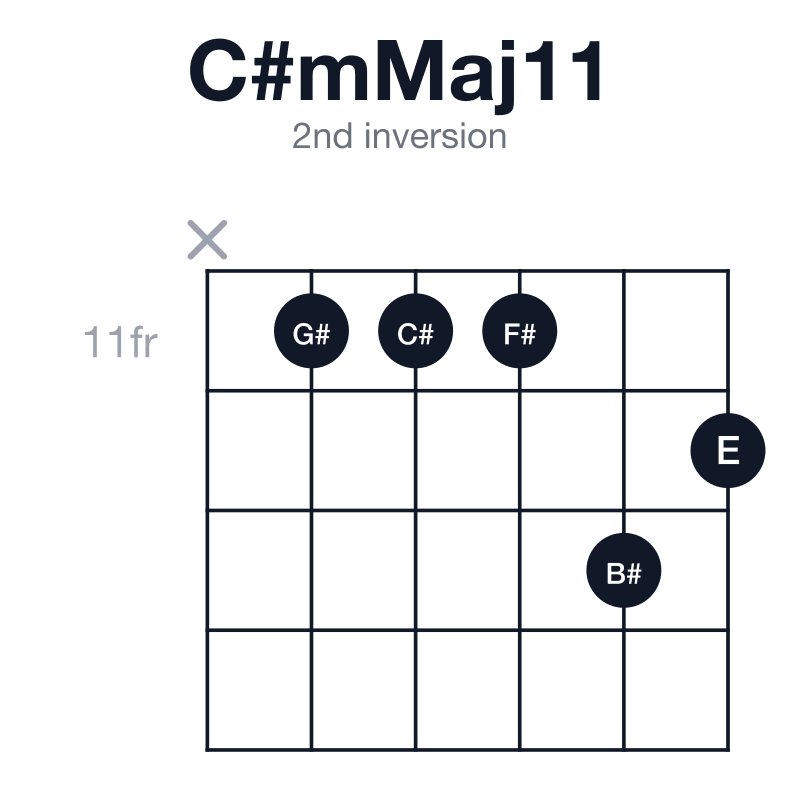
What 2nd inversion means
C#mMaj11 in 2nd inversion puts G# in the bass instead of C#, the 5th of the chord. The notes are the same; what changes is what the bass line does, which is most of why you would reach for it — it lets the lowest voice move by step where the root would have jumped.
One of C#mMaj11’s 5 shapes does this:x-11-11-11-13-12
How to use C#mMaj11
How you get to it. The turn that lands on C#mMaj11 is to : the ii and the V of C# minor, which is where a minor tonic is usually arrived at rather than simply begun on.
Hear it land:→→
What to play over C#mMaj11
Useful scales
- +A
Contains C#mMaj11 and adds flat thirteenth.
- +A#
Contains C#mMaj11 and adds thirteenth.
Chords near C#mMaj11
Change one note
The common shapes and the derived voicings come from different places, and both are explained in how this site is built.