About C#maj7b5
C#maj7b5 is C#, E#, G and B#. It keeps the major 3rd and 7th of , but lowers the 5th one fret to the .
The flat 5th replaces the natural 5th. A maj7 sharp 11 chord keeps the natural 5th and adds the sharp 11. The names are not interchangeable.
Keep the flat 5th audible. Without it, the remaining notes only spell .
Also written C#M7b5, C#Δ7b5 or C#maj7(b5).
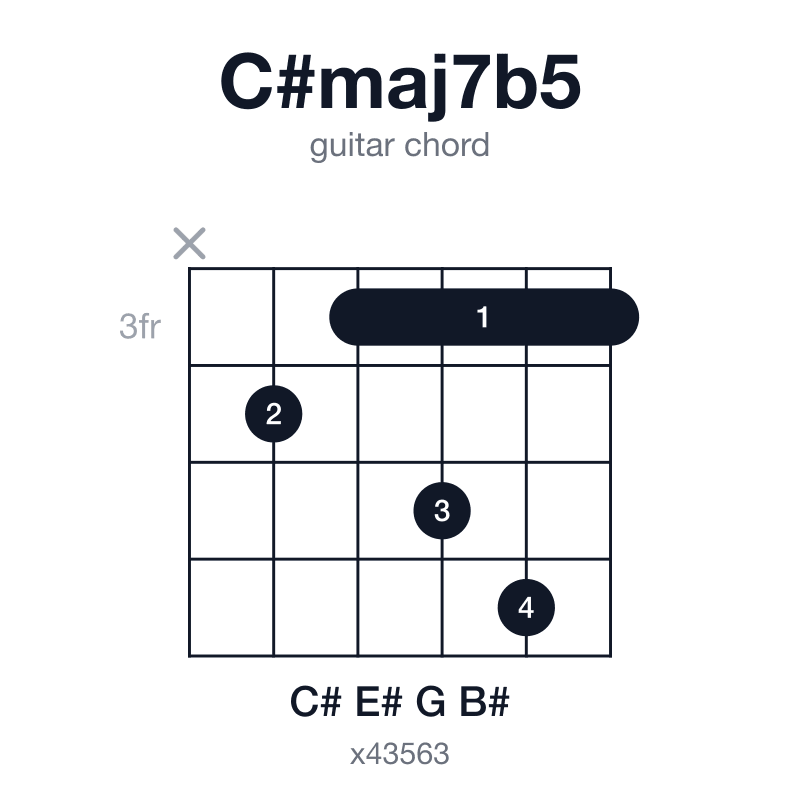
How to use C#maj7b5
How you get to it. The turn that lands on C#maj7b5 is to — the ii and the V of C# — and shares its third and seventh with , so the hand barely moves between them.
Hear it land:→→
In which keys. Every note of C#maj7b5 belongs to F minor (the ♭VI) and Ab major (the IV, the subdominant).
What to play over C#maj7b5
Useful scales
- +D#G#A#
Contains C#maj7b5 and adds ninth, fifth and thirteenth.
- +D#AA#
Contains C#maj7b5 and adds ninth, sharp fifth and thirteenth.
Chords near C#maj7b5
Change one note
The common shapes and the derived voicings come from different places, and both are explained in how this site is built.