B7b5 guitar chord

3rd inversion · A in the bass

The standard grips this chord is usually shown with.

  • Tap a note to hear it
  • Arrows change position
  • Fingers, notes or intervals
  • Play the chord
About B7b53rd inversion

B7b5 is B, D#, F and A B7 with the fifth lowered a semitone.

It sounds symmetrical and slightly unreal. The same four notes spell a 7♭5 a tritone away, which is exactly why one can stand in for the other.

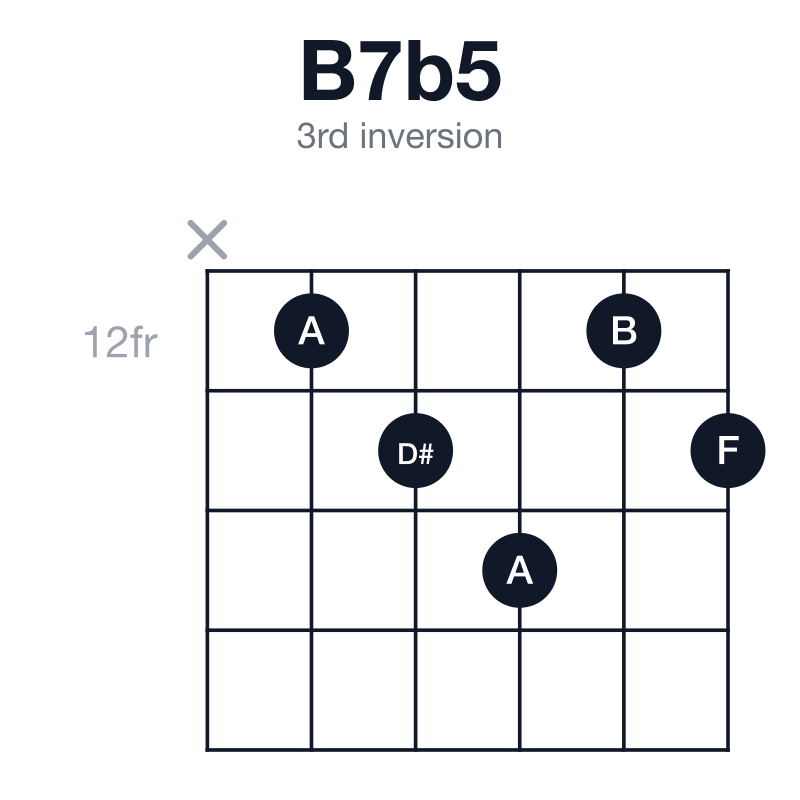
B7b5 3rd inversion guitar chord diagram: B, D#, F, A, played x-12-13-14-12-13
B7b5 3rd inversion, x-12-13-14-12-13 — the shape above, as a picture.

B7b5 notes and formula

Notes and interval formula
BD#FA
13♭5♭7

Altered dominant — and the chord that makes the tritone substitution work.

Also written B7(b5), B7-5 or B7♭5. The same chord either way; which spelling you meet depends on who wrote the chart.

How to play B7b5

B7b5 in 3rd inversion puts A in the bass instead of B, the 7th of the chord. The notes are the same; what changes is what the bass line does, which is most of why you would reach for it — it lets the lowest voice move by step where the root would have jumped.

One of B7b5’s 6 common shapes does this: x-12-13-14-12-13.

Start with x212011 open string and down at the nut. 1 of the 6 shapes here sits in open position. None of them needs a barre. Together they cover the neck from the 1st fret to the 14th.

Every common shape for B7b5
FretsWhereBassTopHand
x21201open positionB, root positionF1 open string
x2324x2nd fretB, root positionD#all fretted
7x786x6th fretB, root positionFall fretted
x-x-9-10-10-119th fretB, root positionD#all fretted
x-12-13-14-12-1312th fretA, 3rd inversionFall fretted
x-x-13-14-12-1312th fretD#, 1st inversionFall fretted

The same notes rebuilt from scratch give 5 shell, 14 drop 2, 9 drop 3 and 1 open string voicings, each on its own page.

Tensions. A shell of B7b5, root, third and seventh, leaves a string free, and the tones that belong over it are the b9 (C), the 9 (C#), the #9 (C##), the b13 (G) and the 13 (G#).

How to use B7b5

B7b5 is a dominant with its tension raised, so it still points at E — harder than a plain seventh does, because the altered tones sit a semitone from where they are going.

Voice by voice, B7b5E. 3 voices move by a semitone, and one note is common to both chords.

In B7b5MovesIn E
B, the rootstays where it isB, the fifth
D#, the major thirdrises a semitoneE, the root
F, the flat fifthfalls a semitoneE, the root
A, the flat seventhfalls a semitoneG#, the major third

What to play over B7b5

Every note of B7b5 is in B whole tone, B lydian dominant, B altered and B half-whole diminished.

Chords near B7b5

Change one note of B7b5 and you have Bmaj7b5 (the flat seventh becomes a major seventh), Bm7b5 (the major third becomes a minor third), B7 (the flat fifth becomes a fifth), Baug7 (the flat fifth becomes a sharp fifth) or B9b5 (add the ninth).

B7b5 is an altered chord — a dominant seventh with its fifth or ninth moved. Altered dominant chords on every root.

On B7b5’s sound and use this page follows Mark Levine, The Jazz Theory Book (Sher Music, 1995). The shapes and the derived voicings come from different places, and both are explained in where the chords and the theory come from.

Midi Settings

7.5
Play Style
One pass of the pick from the lowest string up, everything left ringing.
Instrument
350
150

Style

Shows each chord the way this style would voice it, and marks which of its alternatives belong to the idiom.

Layout

Left Handed Mode